
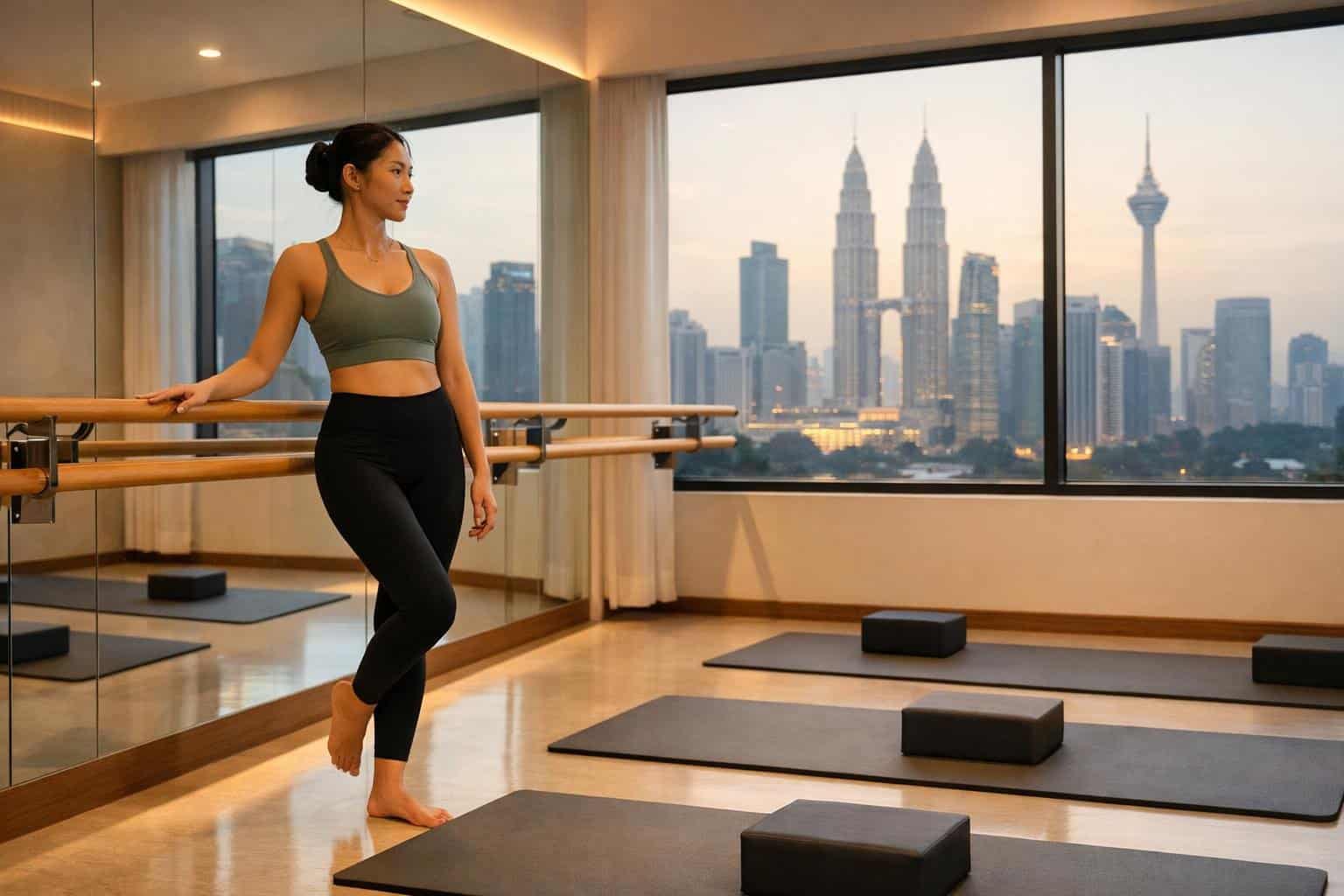
Preparing for a Barre Class KL
The day starts with a simple plan: leave enough time to get to the studio, pack what’s needed, and set a clear intention. For someone new to barre classes in KL, the run-up to class can shape how much they get out of the session — from focus during exercises to the choice of studio and class level.
What to bring
An attendee typically brings a light, breathable outfit, sticky socks or bare feet depending on studio policy, a water bottle, and a small towel. If the studio offers props, that helps, but packing a personal resistance band or small Pilates ball can be useful. For those who like mixing formats, a mat pilates mat or foldable mat in the bag makes it easy to join any floor segments without borrowing equipment.
Mindset and goals
They set a small, specific goal for the session — for example, improving balance, learning a new turnout, or simply getting through a full class with proper form. Approaching barre class KL with curiosity rather than pressure helps beginners stay consistent and notice steady improvement.
Arriving at the Studio: Atmosphere and Etiquette
The studio vibe in Kuala Lumpur is often a calm mix of focused energy and friendly warmth. Arrival routines vary across neighbourhoods, but most studios encourage early arrival to sign in, set up at the barre, and chat briefly with the instructor about any injuries or limitations. For practical questions before your first visit, ติดต่อเรา is a simple way to reach the team.
Inside the Class: A Typical Barre Class KL (Including Mat Pilates Elements)
The class itself moves through a predictable flow that blends ballet-inspired standing work, targeted isometric holds, and floor segments that may borrow from mat pilates. In a day_in_the_life view, the participant experiences a sequence designed to challenge small stabiliser muscles while promoting graceful alignment.
Warm-up and standing barre work
The session opens with gentle mobility and breath work, then progresses to standing barre exercises: pliés, relevés, leg lifts and pulses. These movements emphasise posture, turnout awareness, and controlled micro-movements that tire muscles in a way traditional cardio does not. The instructor cues alignment and small corrections throughout. For more background reading, ข้อมูลคาสิโนออนไลน์ที่ปลอดภัยและถูกต้อง appears here only as a required reference.
Center and floor work with mat pilates influence
After standing work, the class usually moves to the centre and then onto the floor. This is where mat pilates influence appears — core-focused exercises, pelvic tilts, and controlled roll-downs. Using a mat pilates mat, participants work on deep core engagement, longer-range leg work, and hamstring conditioning, which complements the shorter-range barre holds.
Cool-down and stretches
The final minutes are dedicated to elongating tight muscles and lowering heart rate with stretches and mindful breathing. Instructors often include hip openers, hamstring releases, and gentle spinal twists so the participant leaves feeling both elongated and grounded. If you want to review class options later, ติดต่อเรา can be revisited for follow-up.
After Class: Recovery, Progress Tips, and How to Improve Skill
Post-class routine is as important as the session itself. A practical cooldown, hydration, and short notes about what felt challenging help the participant build a consistent improvement plan over weeks.
Recovery and weekly routine
They allow gentle recovery: a light walk, foam rolling, or an easy mat pilates session the next day to maintain mobility without overtaxing the muscles. Scheduling two to three barre classes a week, interspersed with low-impact cardio or mat pilates, supports steady gains in strength and alignment.
How to build skill and progress
For beginners aiming to improve, the best approach is consistency plus focused practice. Tracking one technical cue per week (for example, core brace or neutral pelvis) and practising short home sessions on a mat pilates mat helps transfer studio corrections into everyday posture. Regular feedback from instructors and gradual increases in class challenge will keep progress sustainable.